Solitaire: Puzzle Card Games
- 3.9
- Rating
- 10.00M
- Installs
- Free
- Price
 Analysis by App-foxy
I installed Solitaire: Puzzle Card Games expecting the familiar card game I could open for a few quiet minutes, and that is exactly where its appeal begins. It is a free Android card game from PuzzleMaker - block puzzle, built around classic Solitaire rather than a large collection of unrelated modes. The idea is simple: deal a game, make sensible moves, clear the layout, and start again. That simplicity makes it easy to understand immediately, but it also raises an important question: does it still deserve a place on your phone after the first week?
My short answer is yes, if you want a low-pressure way to fill spare moments and you enjoy the rhythm of traditional Solitaire. I would not recommend it to someone looking for a deep strategy game, a social card experience, or constant new content. Its strength is not novelty. Its strength is being available, familiar, and quick to return to when you want a small mental break.
Why the first week feels so easy to enjoy
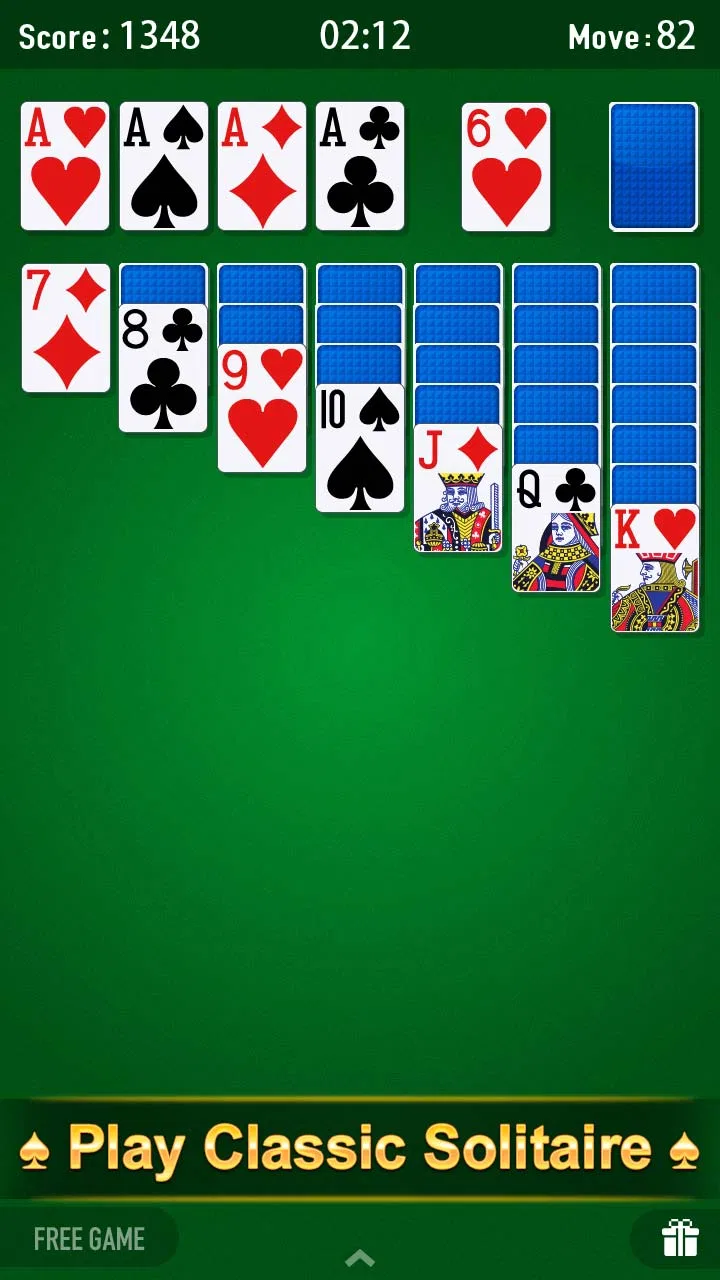
The first session is almost frictionless. Solitaire is already recognizable to many players, so there is no complicated rulebook to study before playing. You can focus on arranging cards, uncovering hidden options, and deciding whether a move opens the board or merely postpones a problem. That makes the game suitable for a short break at home, during a commute, or while waiting for an appointment.
You May Also Like

 Pandora - Music & Podcasts
Pandora’s Music Is Easy to Start, but Harder to Recover
Pandora’s strength is its low-effort path from a seed to a station. Its weak spot is how much confidence it asks you to place in connection, setup, and quiet recovery.

 8 Ball Pool
 Is Built on Rivalries, Rematches, and Routine
A close look at the rivalries, rematches, shared routines, and unanswered safety questions that turn a quick pool match into a persistent mobile community.

 Samsung Music
’s Quiet Strength Is Playing What You Already Own
Its reach comes less from spectacle than from dependable access to a personal library. That simplicity is both the app’s strongest retention engine and its ceiling.

 AccuWeather: Weather Radar
AccuWeather Review: A Quick, Clear Forecast for Everyday Decisions
For everyday plans, the best forecast is the one you can understand quickly. AccuWeather makes rain timing, radar, and local conditions easy to act on, with a few trade-offs.

 Hill Climb Racing
Why Hill Climb Racing Still Turns Crashes Into One More Run
A tiny car, a bumpy hill and one more upgrade: Hill Climb Racing keeps resurfacing because its simple chaos makes every near-miss feel personal.

 AliExpress - Shopping App
AliExpress Makes Global Shopping Feel Personal, but Shoppers Bear the Risk
AliExpress turns a global marketplace into a pocket-sized discovery engine. Its reach is useful, its shopping loop compelling, and its trade-offs easy to miss.
More From Our News Desk
View All News


I also like the way this kind of game gives a small sense of progress without demanding a long commitment. A successful deal can take only a few minutes, while a difficult one encourages you to reconsider your earlier choices. The best moments are not dramatic; they come from spotting that a previously blocked card can finally be moved, or realizing that a careful sequence has opened several useful plays at once.
Because it is free, the entry decision is straightforward. You can try it without treating the download as a serious purchase, and the Everyone content rating makes it appropriate for a broad audience. The game runs on Android devices using version 6.0 or later, which is useful if you are keeping an older phone in service rather than upgrading for every new release.
During the first week, the most practical habit is to avoid moving cards automatically. I found it more satisfying to pause before each major choice and ask which move reveals a hidden card, creates an empty column, or preserves flexibility for later. That small change turns the game from simple tapping into a modest exercise in planning. It is still relaxing, but it rewards attention more than careless speed.
A good fit for small gaps in the day
A realistic use case is a ten-minute pause after lunch. Instead of opening a social feed and losing track of time, I can play one round, stop when the break ends, and return to the rest of the day. The game works particularly well in that setting because a round has a natural beginning and end. It does not require a team to be online, a conversation to continue, or a large world to load before anything interesting happens.
That same quality can help people who want a gentle way to keep their hands and attention occupied. The card layout gives the mind something concrete to follow, while the familiar rules reduce the mental cost of learning. It is not a substitute for a serious puzzle or a competitive card game, but it can be a comfortable middle ground between doing nothing and committing to a demanding game.
My advice for the first few days is to play with a deliberate rhythm. Make the obvious safe moves first, but do not rush through every available option. When two cards appear playable, choose the move that exposes more of the covered layout or preserves more future choices. This is a simple principle, yet it makes repeated rounds feel less random and helps you understand why some games collapse later even when the opening looked promising.
What the early experience does not provide
The first-week appeal is also limited by the narrow focus. If you expect several Solitaire variants, a campaign, elaborate challenges, or a strong social layer, this is unlikely to satisfy you for long. The confirmed identity of the game is classic Solitaire, and I think it is better to approach it as a focused card pastime rather than as a broad entertainment package.
That focus is helpful when you want consistency, but it can feel plain beside apps that combine multiple card games or add richer progression systems. Players who need visible goals, frequent unlocks, or a competitive leaderboard may lose interest quickly. I would also skip it if your main reason for installing a card game is to play against friends, because the appeal here comes from the solitary decision-making loop.
What remains useful after the novelty fades
After the first week, the question changes from “Is this pleasant?” to “Will I still open it next month?” For me, the answer depends on how I use it. Solitaire does not need a constant stream of new mechanics to remain useful, because the basic challenge comes from evaluating the current layout. Each round asks for a fresh sequence of choices, even though the rules stay familiar.
That makes it a good maintenance game for a phone: something I can return to without relearning its systems. The value is recurring rather than expansive. I am not collecting a large amount of content or following a story. I am using a dependable mental pause that can fit around other activities.
The game has a 4.2 average from around 15 thousand ratings, and it has passed over 10 million installs. Those figures suggest that the straightforward format has found a substantial audience, but they should not be mistaken for proof that every player will find lasting depth. A popular casual game can still be the wrong choice for someone who needs variety, and a simple game can still be exactly right for someone who wants a familiar routine.
The developer, PuzzleMaker - block puzzle, presents this as a classic card experience rather than an ambitious new interpretation. I see that as both a benefit and a limitation. The benefit is that the game knows what it is. The limitation is that there is less reason to stay if your interest depends on surprise. Once the basic flow becomes automatic, your continued use will depend on whether you enjoy the decisions themselves.
How to keep repeated rounds from becoming mindless
One useful approach is to treat each round as a short planning exercise instead of a reflex test. Before emptying a column, consider whether you have a king or another suitable card ready to occupy that space. Before moving a long stack, check whether the move will uncover something important or simply rearrange cards you may need later. These checks take seconds, but they create a more thoughtful loop and reduce the feeling that you are tapping through the same routine.
I also recommend setting a stopping point before you begin. Solitaire is easy to reopen after a loss because the next deal promises a cleaner result, and that can turn a short break into a longer session. A rule such as “one round during a work pause” keeps the game useful instead of letting it become another source of distraction. This is not a feature of the app; it is a practical way to make a simple game fit a real schedule.
Another small insight is to use it when you want controlled stimulation, not when you need a major mood change. The game can occupy attention, but it is unlikely to deliver the emotional variety of an adventure, a competitive match, or a story-driven title. If I am tired and want something calm, it works well. If I am bored because I need discovery, it usually does not solve that problem.
The maintenance burden is pleasantly small
One reason this game can earn lasting space is that it asks little from the player. There is no complex character build to manage, no long-term inventory to organize, and no large set of systems to remember. I can leave it untouched for days and return without feeling behind. That makes it more dependable than games whose enjoyment depends on daily rewards or keeping up with a changing community.
The Android requirement also supports that practical role. Since it works from Android 6.0 onward, it is accessible on a wide range of devices, including older hardware that may not handle demanding modern games comfortably. That does not guarantee identical performance on every phone, but it does make the game a sensible candidate for a spare device or a lightweight everyday installation.
Its current version is 1.37.305, so the app is not sitting at an obviously abandoned starting point. Still, I would judge its maintenance value by how reliably it fits your routine rather than by version numbers alone. A casual game earns its place when it opens easily, makes sense immediately, and gives you a satisfying stopping point. If those basics work for you, you may not need regular novelty.
The free price is another reason the maintenance burden feels low. You are not paying for a large package that must justify itself through constant use. You can keep it installed for occasional rounds, remove it when your habits change, and return later without having invested money in a specialized experience. That flexibility matters for a game whose main purpose is convenience.
Where fatigue begins
The main long-term weakness is repetition. The central actions remain familiar: inspect the layout, move cards according to the rules, uncover hidden cards, and build the suited stacks. For players who enjoy mastering a stable system, that repetition is the point. For others, it will eventually feel like the game has stopped giving them reasons to continue.
I would also be cautious about expecting every deal to feel equally meaningful. Some rounds create interesting choices, while others can become a gradual search for the only sensible move. When the board reaches that stage, the experience is less about clever planning and more about whether the available sequence happens to remain open. That is a normal tension in Solitaire, but it can make losing feel unsatisfying if you wanted every result to reflect skill alone.
Another source of fatigue is the lack of a broader reason to return. A story game can pull me back with characters and unanswered questions. A multiplayer game can create social pressure or rivalry. A collection-based card game can offer new cards to pursue. This Solitaire title relies mainly on the pleasure of playing another round, so it is strongest for people who already like that loop.
Players who need accessibility customization, extensive visual options, or a particular variant should think carefully before settling on it. I would not install it on the assumption that a familiar name automatically means it includes every rule set or presentation choice found in other Solitaire apps. If a specific version of the game matters to you, compare the actual play experience rather than choosing only because the category sounds right.
How it compares with familiar alternatives
Compared with a physical deck of cards, the app is more convenient and less tactile. I do not need a table, a deck, or time to shuffle, and I can start immediately. The trade-off is that the phone becomes part of the experience, which may be undesirable if I am trying to take a break from screens. A physical deck also gives me more control over the pace and a quieter sense of ritual.
Compared with a multi-game card app, this one is more focused. That can make it easier to return to when I know exactly what I want, but it also means fewer ways to escape repetition. A larger card collection is better for someone who wants to move from Solitaire to other familiar games in the same session. This title is better for someone who wants one dependable activity without navigating a crowded menu.
Compared with a competitive online card game, it is calmer and less demanding. There is no need to wait for another player or worry about ranking pressure. That makes it a better choice for quiet solo play, but a worse choice if your enjoyment comes from bluffing, adapting to human opponents, or sharing victories with friends.
Finally, compared with a deep puzzle game, it offers a gentler form of decision-making. The rules are easier to carry in your head, and a round can be abandoned without much cost. The price of that accessibility is reduced complexity. I would choose this game for a short reset, not for a long evening of progressively harder problems.
Who should keep it installed
I think it earns a permanent place on an Android phone for people who enjoy classic Solitaire and want an uncomplicated free option. It is especially suitable for short, self-contained sessions, older Android devices, and players who prefer quiet solo activities over competitive or story-heavy games. The Everyone rating also makes it a broadly approachable choice for households where several people may use the same device.
I would be less enthusiastic for players who quickly tire of repeated rules, need a strong progression system, or want several card formats in one app. It is also not my first recommendation for someone who wants to reduce screen time through a physical pastime. In that case, a real deck may be more satisfying precisely because it removes the phone from the equation.
The best way to decide is to notice what you want from the first few rounds. If you feel relaxed by the familiar layout and start thinking about better decisions, the game has a good chance of becoming a useful habit. If you are already searching for extra modes or a larger goal, the narrow design is unlikely to improve with time.
My long-term verdict
Solitaire: Puzzle Card Games earns lasting value through reliability rather than variety. I can open it for a brief pause, understand the situation immediately, and leave when the round ends. It does not try to be a social platform or an expansive puzzle collection, and that restraint is exactly why it can remain useful for the right player.
Its drawbacks are equally clear: repeated rounds can become routine, difficult layouts may not always feel fully satisfying, and players who need fresh content will probably outgrow it. Those are not minor details; they determine whether the game becomes a steady companion or a short-lived download.
For me, the final judgment is positive but specific. I would recommend it to a friend who asked for free, classic Solitaire on Android and wanted something easy to revisit without maintenance work. I would not recommend it as a complete card-game library or as a substitute for a deeper puzzle experience. If your ideal mobile game is a quiet ten-minute habit, this one has earned its space. If you need constant discovery, it is better to keep looking.
With its release on March 6, 2019, its free access, and its established audience, the game has had time to prove the value of its simple formula. The lasting test is personal: whether the familiar decisions still feel pleasant after novelty fades. If they do, this modest card game can remain useful for months because it asks for little and gives back exactly the kind of small, focused break many players want.
FAQs for Solitaire: Puzzle Card Games
01What features does Solitaire: Puzzle Card Games offer?
Solitaire: Puzzle Card Games offers a variety of features to enhance your gaming experience. These include multiple solitaire variations, daily challenges, and customizable themes. The app also provides a hint system, undo options, and a statistics tracker to monitor your progress. Additionally, players can enjoy offline play without an internet connection.
02Is Solitaire: Puzzle Card Games free to play?
The app is free to download and play, but it contains optional in-app purchases and ads. These purchases can enhance gameplay by unlocking additional themes or removing ads. However, the core solitaire experience is fully accessible without any purchases, allowing users to enjoy the game without spending money.
03Can I play Solitaire: Puzzle Card Games offline?
Yes, Solitaire: Puzzle Card Games can be played offline without an internet connection. This makes it a perfect choice for playing during commutes or in any situation where connectivity is limited. Offline play includes all standard features, ensuring a seamless experience wherever you are.
04How do I customize the themes in Solitaire: Puzzle Card Games?
Customization options are available in the settings menu, where you can choose from a variety of card backs, backgrounds, and themes. Some themes are unlocked through gameplay or in-app purchases. Customizing your game can make the experience more enjoyable and personalized to your tastes.
05Does Solitaire: Puzzle Card Games offer any competitive features?
While primarily a single-player game, Solitaire: Puzzle Card Games includes leaderboards and daily challenges for a competitive edge. Players can compare scores with friends or global players. Completing daily challenges also earns rewards, adding an extra layer of engagement for those seeking competition.
Pros
- Intuitive interface for easy navigation.
- Multiple game modes for variety.
- Offline play available anytime.
- Daily challenges to keep engaged.
- Visually appealing design.
Cons
- Ads can interrupt gameplay.
- Limited customization options.
- In-app purchases are pricey.
- Occasional lag on older devices.
- No multiplayer features available.

Solitaire: Puzzle Card Games
Gallery